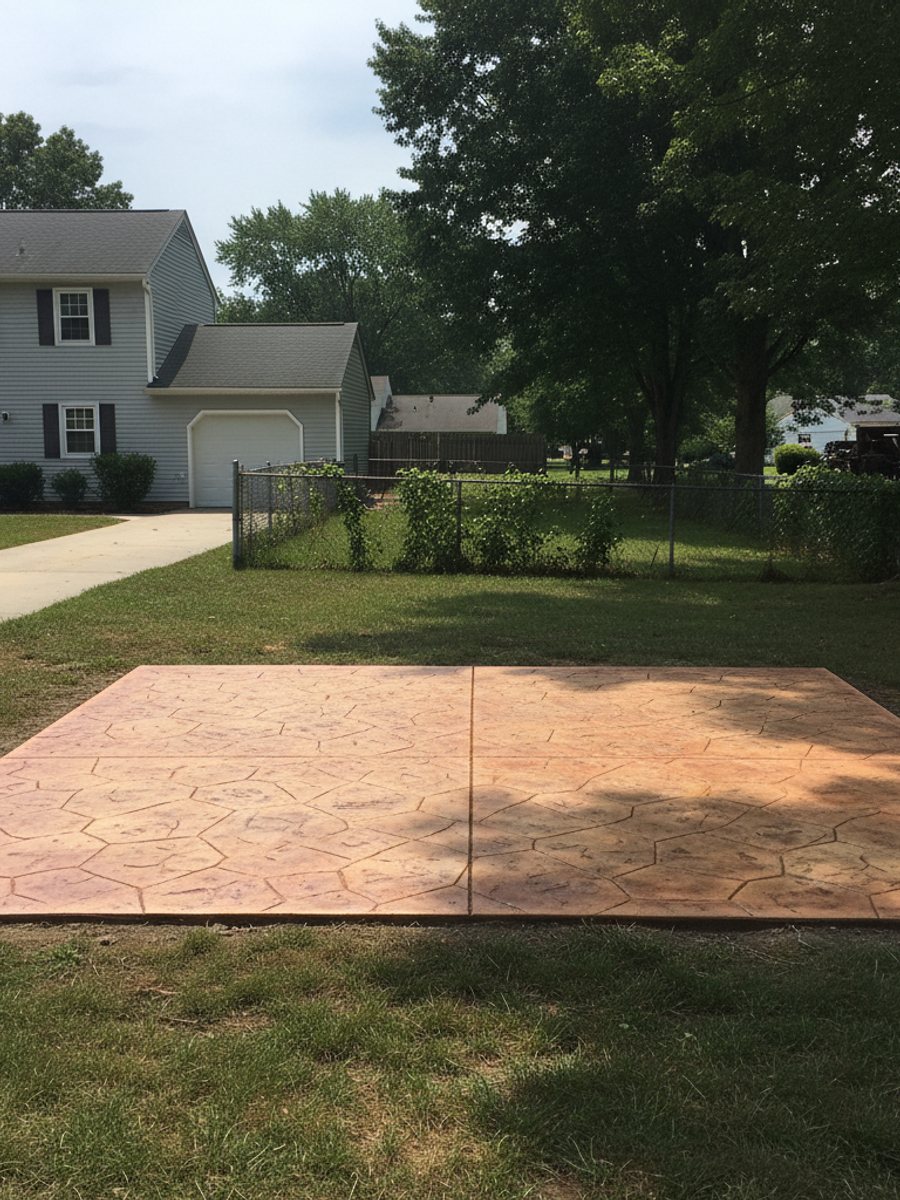
Concrete looks simple once it's poured. Flat, gray, done. What you can't see is the six inches of gravel under it, whether the wire mesh actually got lifted into the middle of the slab instead of sitting on the dirt, and whether the guy who bid the job even walked the yard to check where the water goes. Picking the wrong contractor doesn't usually show up on day one. It shows up eighteen months later as a crack running corner to corner, or a slab that's pulled away from the garage threshold by half an inch.
Start with the license, not the price
In Maryland, home improvement work over $500 has to be done under a Maryland Home Improvement Commission license. Concrete driveways, patios, and steps fall under that. Ask for the MHIC number and look it up yourself before you sign anything, it takes two minutes and tells you if there are open complaints against them. A contractor who gets cagey about giving you that number, or who says 'we don't need one for concrete,' is telling you something. Also ask about liability insurance and get the certificate, not just their word. If a truck backs over a neighbor's fence or a worker gets hurt on your property, you don't want that landing on your homeowner's policy.
Lowball bids are the other tell. If three contractors quote $9 to $11 a square foot for a driveway and a fourth comes in at $6, that gap is coming from somewhere. Usually it's thinner concrete, no rebar, base material that's just the dirt that was already there, or a crew that's going to be gone before the 28-day cure is even finished.
What good contractors do with the ground before they ever mix concrete
Prince George's County sits on the Atlantic Coastal Plain, and a lot of Landover and the towns around it, Cheverly, Bladensburg, Seat Pleasant, have clay-heavy subsoil. Some parts of the county even sit near pockets of Marlboro clay, a formation known locally for swelling when wet and shrinking hard in a dry stretch. That movement under a slab is what causes heaving and cracking that has nothing to do with how the concrete itself was mixed.
A contractor who knows the area compacts a proper gravel base, usually 4 to 6 inches of crushed stone, before anything gets poured, and they'll grade it so water doesn't pool under the slab after a storm. For a driveway carrying car and truck weight, the slab itself should run 5 to 6 inches thick with reinforcement, either rebar on chairs or welded wire mesh actually held up in the pour, not resting on the ground where it does nothing. A patio that only sees foot traffic can get by at 4 inches. If a bid doesn't mention base depth or reinforcement at all, ask directly. If the answer is vague, that's your answer.
Timing matters more than people think
Concrete cures on a clock, and this region's weather pushes on that clock in both directions. Summers here run hot and humid, July and August regularly hit the high 80s and 90s with heavy moisture in the air, which makes concrete set faster on the surface than underneath. A crew that doesn't adjust the mix or the finishing schedule for that can trap moisture and end up with a surface that scales or dusts within a year. Winter brings the opposite problem. Landover gets somewhere around 20 to 30 freeze-thaw cycles a season, not deep-freeze weather like further north, but enough swings through the 30s that a slab poured too late in the year without cold-weather protection can crack from water expanding inside it before it's cured.
Control joints matter here too. A slab decides where it wants to crack, and joints just give it a straight line to do that along instead of a random zigzag across your new patio. Good crews saw-cut those joints within 24 to 48 hours of the pour, before the concrete cracks on its own terms. And you should not be driving on a new driveway for at least 7 days, with full strength taking closer to 28 days. If someone tells you it's fine to park a car on it the next day, that's not a shortcut, that's a problem waiting to happen.
Permits, inspections, and older streets
Concrete work in this part of Prince George's County generally goes through the county's Department of Permitting, Inspections and Enforcement. Driveway aprons that tie into a public street may also need a separate review if the work touches the right-of-way. A reputable contractor pulls the permit themselves as part of the job and knows when a job needs a setback check, especially on corner lots or anywhere close to a property line. If a contractor tells you permits are a waste of time or money, understand that skipping one doesn't just risk a fine, it means nobody with training ever looked at the base prep or drainage before it got covered up.
Older neighborhoods, a lot of Landover and Landover Hills went up mid-century, sometimes have shallow utility lines, old clay sewer laterals, or tree roots from mature trees that a newer subdivision near Largo or Woodmore wouldn't have. That changes how a crew digs and where they're willing to put a footing. It's worth asking a contractor directly whether they call for a utility locate before digging. If they say it's not necessary, that's a corner being cut that could end with a cut gas line, not just a bad slab.
What to actually walk away from
- No written contract, or one that doesn't specify thickness, base depth, and reinforcement type.
- Payment demanded in full, up front, in cash.
- A quote with no mention of a permit when the job clearly needs one.
- Pressure to sign that day because of a 'special price.'
- No answer, or a dismissive one, when you ask about drainage on your specific lot.
None of this is complicated once you know what to ask. It's the same handful of questions on every job: license number, base prep, thickness and reinforcement, permit status, and a written contract that spells all of it out. A contractor who's comfortable with those questions has probably poured a lot of driveways and patios in this county already and knows what the clay and the winters do to bad work. We've handled driveways, patios, steps, and repairs across Greater Landover and the surrounding towns, and you're welcome to run every one of these questions past Paradise Concrete Solutions before you decide who pours your concrete.